


Hexagon’s tagline, “From microns to Mars, we measure what matters for the future,” might sound like overreaching self-confidence, but it is in fact a reasonable summary of the Swedish company’s capacity to precisely enumerate events, actions and their impacts in the most testing settings.
This is a business that spans physical and virtual activities to enable replicas of our real world that are safe to observe and experiment upon.
Headquartered in Stockholm, Sweden, Hexagon is a classic under-the-hood, best-kept-secret technology outfit. It monitors and powers innovation in areas of critical industry that exist firmly behind heavily secured, closed doors to most of us. Power plants, factories, construction sites, mines, autonomous systems, aerospace labs and defence situation rooms are among its domains.
But even if the brand isn’t one you’re likely to bump into online, Hexagon plays a large part in making complex processes that underlie our lives more efficient and safe.
Together, its precision measurement calculator, sensor-enabled visualisation control screen and geospatial analytics engine enable smarter, actionable decision-making.
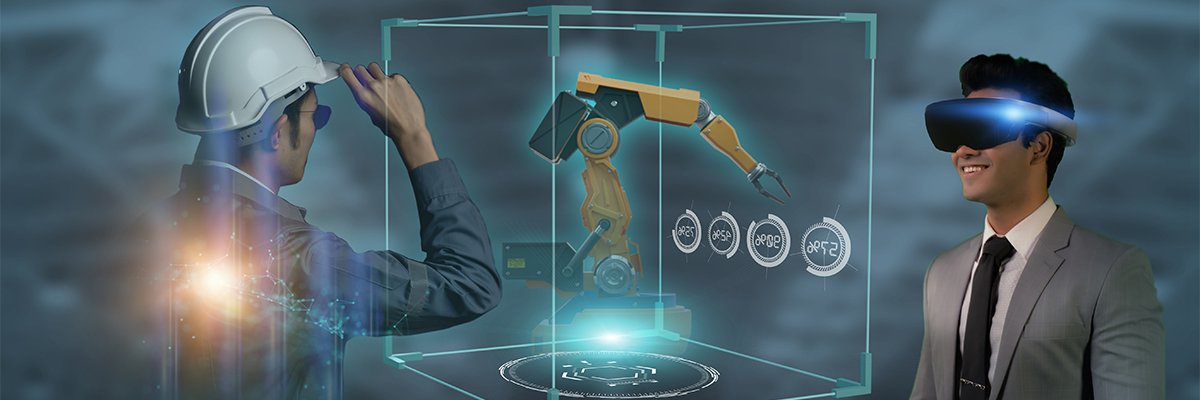
And in the fast-growing area of digital twins, it creates virtual clones of physical environments that mean workers in some of the globe’s most challenging environments can “see” and interact with spaces without requiring risky physical access.
To find out more about Hexagon, I swapped a series of messages with Burkhard Boeckem, chief technology officer at the company.
Swede effect
Looking back, Boeckem says Hexagon’s roots are “deeply Scandinavian” and grounded in the hard science of engineering. A milestone came in November 2000, with the acquisition of the metrology (that is, the science of measurement and precision) business of Brown & Sharpe.
“Measurement is in our DNA,” says Boeckem. “For 25 years, we’ve shaped industries and enabled innovators by delivering precision, accuracy and reliability through our technology. From the beginning, precision and measurement were central, shaping how things are designed, built, inspected, operated and optimised, as well as the way the business developed.”
As industries have become more complex and digitally enabled, Hexagon has aligned with that by advancing in software, automation and digital reality services. However, the “compute” element has to be “anchored in an understanding of how the real world behaves, says Boeckem, and that’s why Hexagon today sits at the physical-digital intersection of sensors, software, and artificial intelligence (AI)-enabled decision-making.
IT remains a sector dominated by the US, despite the recent advances of China and other countries, therefore Hexagon’s Scandinavian heritage and current status as a staple of the Stockholm financial market makes it an outlier. But what of that Swedish or Scandinavian hinterland and does it have any relevance to the way it operates today?
“Being a Swedish company has a profound influence on how we think, how we develop technology, and how we engage with customers,” says Boeckem.
“There is a strong cultural emphasis on long-term value creation rather than short-term optimisation. Innovation is expected to be useful, reliable and durable, rather than performative or driven by trends, but we aim to be disruptive, bold, and continue to bring industry-firsts to markets.”
Sustainability
Turning specifically to the hot topic of sustainability, where Sweden and Scandinavia have long been perceived as pioneers, can the region’s companies be pacesetters for the world?
Boekham thinks the answer is in the positive both for cultural and structural reasons, and these again take us away from short-termism.
“Scandinavia benefits from high trust in institutions and strong governance, which makes it easier to implement ambitious sustainability policies even when they carry real short-term costs,” he says. “That consistency matters, because it allows governments and industry to plan, invest and execute over decades rather than election cycles.”
Boeckem also notes that Scandinavia was an early proponent of ecological thinking.
“The region has also been willing to act early,” he says. “Sweden introduced carbon pricing in 1991. Building and energy-efficiency regulations pushed innovation in areas like heat pumps, smart buildings and district heating, while circular-economy measures, such as repair tax incentives and strong recycling performance, changed how products are designed and maintained.”
Since then, we have seen “tangible” progress in the form of Norway’s dependence on hydropower, Denmark’s prowess in wind and offshore energy and Sweden’s multipronged advances in nuclear, hydro, green steel, bioenergy, fossil-free industrial processes, and carbon capture and storage.
Boeckem argues that it’s important that sustainability is treated as an innovation catalyst rather than bureaucratic constraint. That also takes us back to measurability, and the ability to inform and audit based on exact numbers.
“That long-term mindset shows up in strong ESG performance and governance, and it increases demand for robust measurement and reliable data, because sustainability only works when it is measurable,” he says.
“That’s why Scandinavia can act as a pacesetter globally: it demonstrates that sustainability, industrial competitiveness and long-term growth can reinforce each other when they are grounded in data, execution and tangible operational outcomes.”
The tale of the tape: Why measuring is critical
If Hexagon is at the zeitgeist in sustainability, it is also in a good place when it comes to our global obsession with data as source of compliance and efficiency, and as a platform for strategy. As Boeckem said in an excellent speech last year, the “age of intelligence” is characterised by a reminder of the old chestnut that “what cannot be measured cannot be managed, and what cannot be verified cannot be trusted … The future belongs to those that can measure”.
Forgetting that foundational point, but also the need to join up the physical world and the digital capacity we possess, is perilous, he says.
“If your digital view of the world is wrong, your decisions will be wrong, and they will compound faster,” says Boeckem. “Customers are under simultaneous pressure to improve productivity, safety, resilience and sustainability. The limiting factor is rarely computing power or data volume. It is whether the data reflects reality.
“Hexagon’s strength lies in its ability to … help close what I often describe as the digital reality gap, which is the disconnect between how things are modelled and how they actually behave in the real world. By grounding digital twins, AI and automation in accurate measurement, we help turn theoretical potential into measurable, repeatable, operational advantage that customers can trust.”
Paul Miller, an analyst at Forrester, says Hexagon has a big role to play in industrial automation as hardware, software, AI and human workers combine to render transformative effects.
“Hexagon has clear capabilities in reality capture, from mapping big civil engineering projects to measuring the quality and thickness of a weld on an assembly line,” he says. “The company’s recent investments in robotics, AI and software create more opportunities to automate some tasks, particularly those which are dull and repetitive, dirty, or dangerous.”
Hexagon’s leadership in areas such as digital twins is notable in that many examples of it in use today occur in areas that are often seen as technology late-adopters, such as mining and construction. But Boeckem doesn’t agree with that pejorative category characterisation.
“The truth is, industries like mining and construction are often labelled technology laggards, but that perception doesn’t reflect reality,” he says. “Many are highly tech-savvy and early adopters, particularly in autonomous solutions, digital twins, 3D reality capture and safety-critical systems, where the gains are immediate and mission-critical.”
B2B, meet B2C
Ask the person on the street about virtual worlds and any advance on a blank look (and relocation to a few seats away) is likely to come with references to companies such as Meta and virtual reality headsets. But Boeckem says what he calls “the industrial metaverse” is already here, and that the seemingly very different camps can benefit from sharing perspectives.
“In industrial settings, digital reality has a clear purpose,” he says. “It is there to reduce re-work, improve safety, increase yield and lower environmental impact. They are operational decision systems that influence real-world performance. [But] there is meaningful cross-learning in both directions. From the consumer world, industry can learn a great deal about user experience, accessibility and intuitive design. Even the most powerful tools will not scale if they are difficult to use, particularly in environments where people are under pressure and decisions need to be made quickly.”
In return, B2B can show B2C the relevance of disciplines like trust, accuracy and accountability.
“The opportunity lies in combining the usability expectations shaped by consumer technology with the rigour, validation, resilience and reliability demanded in industrial environments,” says Boeckem. “As spatial intelligence and AI become more pervasive, that combination will be essential to ensuring innovation remains scalable and trustworthy.”
Speaking, as we inevitably must, of AI, he says he is most excited by technologies that connect intelligence with the physical world.
“Robotics and physical AI, high-fidelity digital twins and autonomy grounded in real-time sensor data, have the potential to fundamentally reshape industry,” says Boeckem. “I am optimistic about AI, but also pragmatic. The biggest risk today is not a lack of ambition, but overconfidence in models that are not anchored in reality. In industrial contexts, reliability matters far more than novelty. AI only becomes truly transformative when it is trained, validated and deployed against accurate representations of the real world, with clear accountability for outcomes.”
It’s an exciting area, even if Hexagon seems unlikely to get caught up in the hype machine.
“A few years ago, there was a lot of enthusiasm for the ‘industrial metaverse’, notes Forrester’s Miller. “Use of the term has – thankfully – faded, but the underlying ideas and capabilities remain very relevant: Hexagon was – and still is – one of the companies with many of the building blocks. By focusing on concrete use cases, and by demonstrating clear customer success, Hexagon is well-placed to pull these technologies together in ways that make a meaningful difference.”
A challenge Hexagon may face today, says Miller, is one of perception – and that is despite owning a powerful heritage brand of its own that any camera geek will know. “Hexagon’s biggest weakness is nothing to do with its technology,” he adds.
“Rather, it’s a continued lack of awareness of the brand itself. In fields like surveying, everyone’s heard of Leica, but only those who are in the know immediately connect Leica laser scanners and other equipment with that well-known division’s parent company, Hexagon. The original names associated with other strong acquisitions also continue to cast shade on their parent, despite efforts to build a compelling brand story around Hexagon itself.”
Despite this and all the hype surrounding Industry 4.0 and the metaverse, the establishing principle is straightforward, says Boeckem: “We want every move to increase our ability to help industries build, manufacture and operate more productively, more safely and more sustainably. That’s the bar.”

